
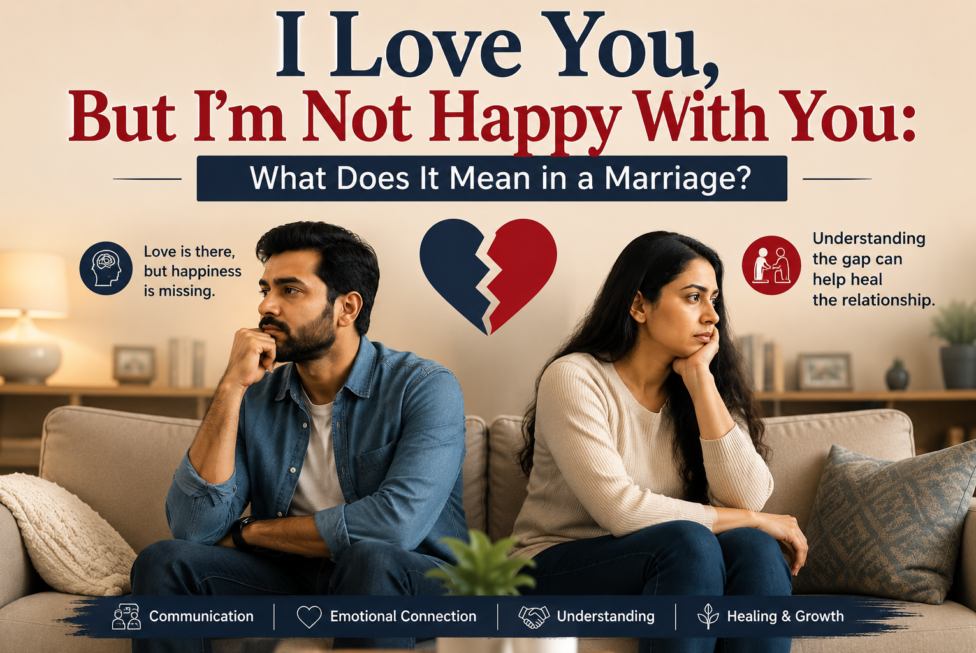
I Love You, But I’m Not Happy With You
I love you, but I’m not happy with you in marriage: A Difficult Truth About Marriage I love you, but I’m not happy with you in marriage.” It sounds contradictory. If i love my partner how can be unhappy in the mariage ? Yet many couples experience exactly this situation. they say ” I love you, but i am not happy with in marriage. Dr. Rabya clinical psychologist has seen many couples during her session. You can love someone deeply and still feel lonely, emotionally disconnected, unheard, frustrated or dissatisfied in the relationship. spouse says “I love you, but I’m not happy with you in marriage.” this important question“Do we still love each other?” It is: “What is happening in our relationship that is making one or both of us unhappy?” This article “I love you, but I’m not happy with you in marriage” explores what this statement may mean, why it happens, and when professional marriage counselling or couples therapy may be helpful. Table of Contents Can You Love Someone and Still Be Unhappy? What Does “I Love You, But I’m Not Happy With You” Mean? Why Can Someone Feel Unhappy in a Loving Marriage? 7 Common Reasons for Marital Unhappiness When Love and Happiness Start Feeling Different What Should You Do If Your Partner Says This? What If You Are the One Who Is Unhappy? Can Marriage Counselling Help? When Should You Seek Professional Help? Frequently Asked Questions Final Thoughts 1. I love you, but I’m not haapy with you in marriage. can be possible? Yes!!! I love you it does not mean relationship satisfaction and happiness. You may love your partner because of your emotional bond, shared history, affection, commitment and memories. At the same time, you may feel unhappy because of: Frequent arguments Poor communication Emotional distance Unmet emotional needs Lack of appreciation Loss of trust Resentment Differences in expectations Family or financial pressures Intimacy concerns This means that relationship unhappiness does not automatically mean that love has disappeared. Sometimes, it means that the relationship needs attention. 2.What Does “I Love You, But I’m Not Happy With You” Mean? The same sentence can have very different meanings. For one person, it may mean: “I don’t feel understood anymore.” For another: “We keep having the same arguments.” Someone else may mean: “I feel lonely even though we live together.” Or: “I love you, but something important is missing from our marriage.” The sentence itself is not the complete story. The emotion and experience behind it are what need to be understood. Instead of immediately asking: “Do you still love me?” a more helpful question may be: “What is making you unhappy in our relationship?” That question can shift the conversation from fear to Understanding 3. Why Can Someone Feel Unhappy Even When They Still Love Their Partner? A relationship involves more than love. People also need to feel heard, respected, emotionally connected and able to discuss difficult issues. When these areas become problematic over time, dissatisfaction can grow. A person may still have strong feelings for their partner while simultaneously feeling: “This relationship isn’t working for me the way it used to.” That distinction is important. It means the couple may need to understand the pattern of their relationship, rather than simply question whether love exists. 4. 7 Common Reasons for Marital Unhappiness Every marriage goes through difficult phases. Feeling unhappy in a marriage does not always mean that love has disappeared. Sometimes, it means that important emotional needs, communication patterns, or unresolved concerns are affecting the relationship. Here are seven common reasons why someone may think, “I love my partner, but I’m not happy in my marriage.” 1. Emotional Needs Are Not Being Met Feeling loved is not always the same as feeling understood. One partner may need more affection, appreciation, emotional support, quality time, or reassurance. When these needs remain unspoken or repeatedly go unmet, a person can gradually feel lonely even while living with someone they love. 2. Communication Has Become Difficult Communication problems are among the most common sources of marital conflict. A simple conversation can turn into criticism, defensiveness, anger, or silence. When couples repeatedly experience this pattern, they may begin avoiding important conversations altogether. Over time, unresolved communication problems can create emotional distance and resentment. 3. Resentment Has Built Up Over Time Resentment rarely develops because of one argument. It can accumulate through repeated disappointments, broken promises, unequal responsibilities, criticism, or unresolved conflicts. Eventually, even a small disagreement may trigger emotions connected to many previous experiences. 4. Emotional Intimacy Has Decreased A couple can spend every day together and still feel emotionally disconnected. Emotional intimacy means feeling seen, heard, valued, understood, and emotionally safe with your partner. When meaningful conversations, affection, appreciation, or shared experiences decrease, marriage can begin to feel more like a routine than a relationship. 5. Past Hurt Has Never Been Properly Resolved Some couples stop talking about painful experiences and assume that the problem is over. But unresolved hurt can continue influencing the relationship. Betrayal, repeated criticism, broken trust, family conflicts, or painful experiences from the past may affect how partners respond to each other today. A present argument may sometimes be connected to an older emotional wound. 6. Expectations About Marriage Have Changed People change—and relationships change with them. Career pressures, parenthood, financial responsibilities, ageing parents, lifestyle changes, and personal growth can all affect a marriage. Sometimes, partners discover that their expectations about marriage are no longer the same. The relationship may need new conversations, new boundaries, and new ways of supporting each other. 7. Couples Have Stopped Repairing After Conflict Disagreement does not automatically mean that a marriage is unhealthy. The important question is: What happens after the disagreement? Healthy relationship functioning involves the ability to return to difficult conversations, acknowledge hurt, listen, apologise when appropriate, and make efforts to repair the relationship. When every conflict ends in prolonged silence, withdrawal, blame, or emotional disconnection, unhappiness can gradually become part of everyday married