
Marriage Counselling: What Happens in a Therapy Session? A Step-by-Step Guide
Marriage counselling is not about deciding who is right and who is wrong. It is about understanding what is happening between two people, identifying unhealthy patterns, and creating a safer and more respectful way of communicating.
Every marriage goes through difficult phases. Couples may argue about money, parenting, family responsibilities, intimacy, work, or household expectations. Sometimes the problem is not one major event but months or years of small misunderstandings, emotional distance, resentment, or conversations that never seem to reach a solution.
As a clinical psychologist and marital therapist, I often meet couples who say, “We have tried talking about it many times, but nothing changes.”
That is where professional support can make a difference.
At Mind Detox Centre – All Psychological Services, marriage counselling provides couples with a structured and confidential space to understand their relationship, communicate more effectively, work through conflicts, and decide how they want to move forward.
Table of Contents
- What Is Marriage Counselling?
- Why Do Couples Seek Marriage Counselling?
- What Happens Before the First Session?
- Step-by-Step Marriage Counselling Process
- How Marriage Counselling Improves Communication
- Rebuilding Trust After Emotional Hurt or Infidelity
- How Long Does Marriage Counselling Take?
- Does Marriage Counselling Really Work?
- Can One Partner Attend Counselling Alone?
- When Should You Seek Marriage Counselling?
- Frequently Asked Questions
- Final Thoughts
What Is Marriage Counselling?
Marriage counselling, also called marital or couples therapy, is a form of psychological therapy in which partners work with a trained professional to address difficulties affecting their relationship.
The American Psychological Association describes couples therapy as therapy involving both partners in a committed relationship, focusing on problems within and between individuals that affect the relationship.
In practical terms, marriage counselling helps couples slow down the cycle of repeated arguments and understand what is happening underneath those arguments.
For example, a couple may repeatedly fight about household responsibilities.
On the surface, the disagreement may appear to be about who should cook, clean, or manage finances. But underneath it may involve feelings of being unappreciated, unsupported, unheard, or taken for granted.
Good counselling does not only address the visible argument. It explores the emotional and behavioural patterns behind it. 
Why Do Couples Seek Marriage Counselling?
Couples seek professional help for many different reasons.
Some common concerns include:
- Frequent or unresolved arguments
- Communication problems
- Emotional distance
- Loss of trust
- Infidelity or dishonesty
- Financial disagreements
- Parenting conflicts
- Interference from extended family
- Work-life stress
- Differences in expectations
- Intimacy concerns
- Repeated misunderstandings
- Considering separation or divorce
- Difficulty reconnecting after a major life event
The important point is that you do not have to wait until your marriage reaches a crisis before seeking help.
Many couples benefit from addressing problems when they are still manageable.
Seeking counselling is not an admission that a marriage has failed. In many cases, it represents a willingness to understand the relationship and work towards positive change. Your source also highlights that early support can be useful before relationship difficulties become deeply entrenched.
What Happens Before the First Marriage Counselling Session?
It is normal to feel nervous before your first session.
One partner may worry:
“Will the therapist take my spouse’s side?”
Another may think:
“Will I be blamed for everything?”
A professional therapist’s role is not to conduct a trial between two partners.
The first session generally focuses on understanding the relationship and creating a safe, respectful and non-judgmental environment where both partners can express their experiences.
The therapist may ask about:
- How the relationship began
- Major events in the relationship
- Current difficulties
- Family backgrounds
- Communication patterns
- Previous attempts to solve the problem
- Individual concerns
- Strengths within the relationship
- Major sources of stress
This initial understanding helps the therapist develop a clearer picture of the couple’s difficulties.
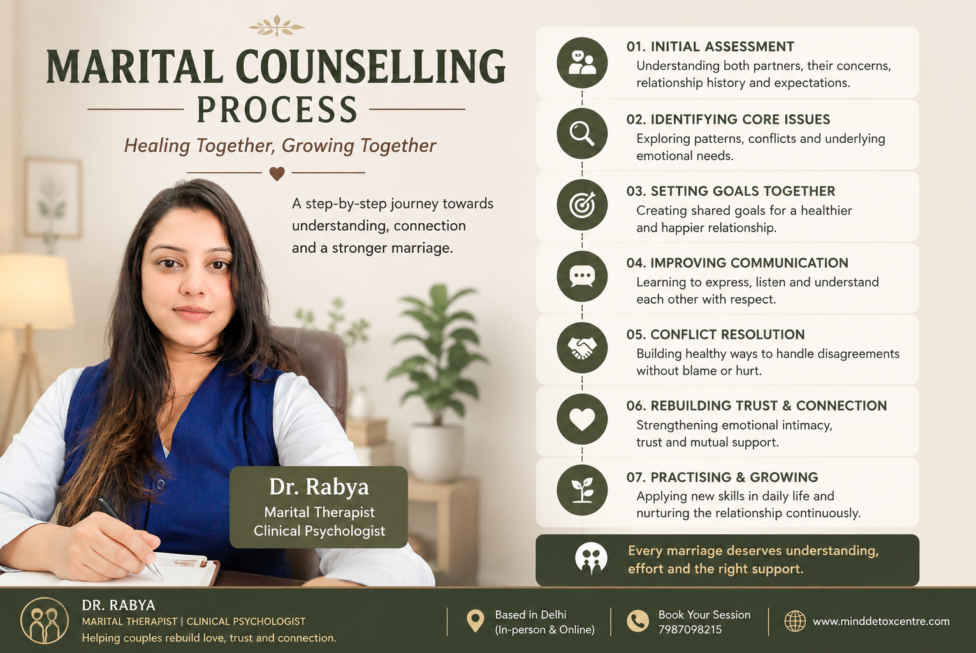
7 Strong Step for Marriage Counselling Process
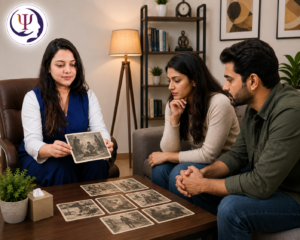
Step 1: Understanding the Relationship
The first stage is usually assessment and understanding.
Rather than focusing only on the latest argument, the therapist tries to understand the larger relationship pattern.
Questions may include:
- How do disagreements usually begin?
- What happens when one partner becomes angry?
- Does the other partner withdraw or become defensive?
- How are conflicts usually resolved?
- What makes each person feel emotionally supported?
- What strengths does the relationship already have?
The objective is not to identify a winner or loser.
The objective is to understand the pattern.
Step 2: Identifying the Core Problems
Sometimes the issue that couples bring into therapy is only the visible part of a deeper problem.
For example, repeated arguments about money may actually involve different expectations about responsibility, security, lifestyle, or decision-making.
Similarly, arguments about parenting may involve different childhood experiences, beliefs about discipline, or feelings of being unsupported.
During counselling, these underlying factors can be explored so that the couple is not simply putting temporary solutions over a deeper problem.
Step 3: Setting Shared Goals 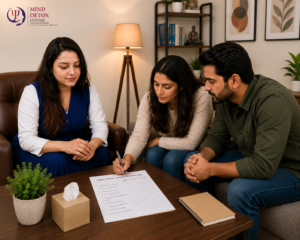
Marriage counselling becomes more meaningful when both partners understand what they want to change.
Depending on the couple’s needs, goals may include:
- Communicating respectfully
- Reducing repeated arguments
- Rebuilding trust
- Increasing emotional connection
- Improving parenting teamwork
- Managing stress together
- Understanding each other’s needs
- Learning healthier ways to handle disagreements.
- Making a thoughtful decision about the future of the relationship
Goals also help the therapist and couple evaluate progress over time.
Step 4: Improving Communication
Communication is one of the most important areas addressed in marriage counselling.
Many couples believe they are communicating when they are actually reacting.
One partner speaks.
The other becomes defensive.
The first partner becomes louder.
The second partner withdraws.
The conversation eventually becomes an argument.
Counselling can help couples interrupt this cycle.
Depending on the situation, a therapist may teach skills such as:
- Active listening
- Expressing feelings without blame
- Using respectful language
- Asking clarifying questions
- Identifying emotional triggers
- Listening before responding
- Discussing one issue at a time
The goal is not simply to talk more.
The goal is to communicate in a way that allows both partners to feel heard and understood.
Step 5: Learning Healthy Conflict Resolution
Conflict itself does not necessarily mean that a marriage is unhealthy.
What matters is how the conflict is handled.
During therapy, couples may learn to:
- Avoid personal attacks
- Stay focused on the issue
- Recognise when emotions are escalating
- Take a healthy pause when necessary
- Avoid bringing unrelated past conflicts into every discussion
- Focus on solutions instead of winning
- Return to difficult conversations after calming down
A useful question is not:
“How can I prove that I am right?”
Instead, couples can gradually learn to ask:
“How can we solve this problem without damaging our relationship?”
This shift can completely change the nature of a conversation.
Step 6: Rebuilding Trust and Emotional Connection
Trust can be damaged by many experiences, including dishonesty, broken promises, emotional distance, secrecy, or infidelity.
Rebuilding trust rarely happens through one conversation.
It usually requires consistency.
Marriage counselling may help couples understand what damaged the trust, acknowledge the emotional impact, establish healthier communication, and identify behaviours that can gradually rebuild a sense of safety.
Emotional connection is also important.
A couple may live in the same house, share responsibilities, and raise children together while feeling emotionally disconnected.
Therapy can help partners understand each other’s emotional needs and rediscover ways of connecting.
Step 7: Practising New Skills Between Sessions
The counselling room is only one part of the process.
Real change happens when couples begin applying what they learn in everyday life.
Depending on the situation, a therapist may suggest communication exercises, reflection activities, or specific ways to approach difficult conversations.
The following session can then be used to discuss what worked, what did not work, and what needs to be changed.
This creates an ongoing learning process rather than treating each session as an isolated conversation.
How Marriage Counselling Can Improve Communication
Healthy communication does not mean that couples will never disagree.
It means they can disagree without constantly attacking, blaming, humiliating, threatening, or emotionally withdrawing from each other.
Evidence-based psychological practice emphasises integrating research evidence with clinical expertise and the individual needs and preferences of the people receiving care.
For couples, this means counselling should not be a generic formula.
The therapist needs to understand the couple’s history, personality, circumstances, goals, and relationship dynamics.
Rebuilding Trust After Infidelity
Infidelity can create intense emotional pain.
The partner who discovers the betrayal may experience anger, confusion, insecurity, sadness, or difficulty trusting again.
The other partner may experience guilt, shame, fear, defensiveness, or uncertainty about the future.
Marriage counselling does not erase what happened.
Instead, it can provide a structured environment to understand the impact of the event, communicate honestly, explore accountability, and determine whether rebuilding the relationship is possible and desired by both partners.
Not every relationship follows the same path after infidelity.
Some couples work towards rebuilding the marriage.
Others use therapy to make a thoughtful decision about separation.
The purpose of counselling is not to force a particular outcome.
How Long Does Marriage Counselling Take?
There is no fixed number of sessions that is appropriate for every couple.
The duration depends on several factors, including:
- The nature of the concerns
- How long the difficulties have existed
- The level of conflict
- The willingness of both partners to participate
- The goals of therapy
- Whether there are additional individual psychological concerns
Some couples may seek relatively brief counselling for a specific concern, while others may require longer-term support for more complex relationship difficulties.
The focus should be on meaningful progress rather than simply counting sessions.
Does Marriage Counselling Really Work?
Marriage counselling is not a guarantee that every relationship will continue.
However, couples therapy can provide a structured opportunity to improve communication, understand emotional patterns, manage conflict, and make more informed decisions about the relationship.
Research and professional resources in couples therapy emphasise skills such as collaborative communication, conflict management, and changing negative interaction patterns.
Outcomes can depend on several factors, including openness, participation, the therapeutic relationship, the nature of the difficulties, and the couple’s willingness to work on identified patterns.
Can One Partner Attend Marriage Counselling Alone?
Yes.
Ideally, when both partners are willing, joint counselling can provide an opportunity to work directly on relationship patterns.
However, there are situations in which one partner may initially seek individual psychological support.
Individual counselling can help a person understand their own emotions, expectations, communication style, boundaries, and relationship patterns.
Your source also notes that individual sessions may help someone understand their own thoughts, emotions, and relationship patterns, while joint sessions are generally recommended when both partners are willing to participate.
When Should You Seek Marriage Counselling?
You may want to consider professional support if you notice:
- The same argument happening repeatedly
- Increasing emotional distance
- Difficulty having a calm conversation
- Loss of trust
- Frequent criticism or defensiveness
- Parenting disagreements that remain unresolved
- Major life changes creating relationship stress
- Feeling lonely despite being together
- A growing desire to separate
- A genuine wish to improve the relationship but uncertainty about how to begin
You do not have to wait until the relationship is at breaking point.
Sometimes the best time to seek help is when both partners still have enough willingness and emotional energy to work on the relationship.
Frequently Asked Questions About Marriage Counselling
Will the therapist take my partner’s side?
A professional marriage counsellor should work to understand both perspectives rather than choosing one partner as the “right” person.
The focus is on understanding the relationship and helping both individuals participate constructively.
Is marriage counselling confidential?
Confidentiality is an important part of professional psychological services, subject to applicable ethical and legal exceptions, such as situations involving serious and immediate risk of harm.
A therapist should explain relevant confidentiality boundaries clearly.
Can counselling help after infidelity?
It can help couples explore the emotional impact of infidelity, understand what happened, work on communication and trust, and make a thoughtful decision about the future of the relationship.
What if my partner refuses counselling?
You can still seek individual psychological support.
Working on your own emotional responses, communication patterns, boundaries, and decision-making can sometimes be an important first step.
Is marriage counselling only for couples who are about to divorce?
No.
Couples may seek counselling at many stages of a relationship.
Some come because of serious conflict. Others want to improve communication, strengthen their emotional connection, prepare for a major life transition, or address concerns before they become more serious.
Why Should You Choose Marriage Counselling at Mind Detox Centre
At Mind Detox Centre – All Psychological Services, we understand that relationship problems are rarely as simple as they appear from the outside.
Behind an argument, there may be hurt.
Behind anger, there may be disappointment.
Behind silence, there may be fear of being misunderstood.
And behind repeated conflict, there may be a pattern that both partners have unintentionally learned over time.
Our approach is to understand the individual as well as the relationship.
Mind Detox Centre provides psychological services including psychotherapy, counselling, family psychotherapy, and couple/marital counselling.
The centre is founded and directed by Dr. Rabya Umman, Clinical Psychologist, who provides psychological support for relationship concerns alongside other mental health services.
Final Thoughts

Marriage counselling is not about proving who is right.
It is about creating an opportunity for two people to understand what has happened between them and what they can do differently moving forward.
Sometimes couples need help learning how to communicate.
Sometimes they need to rebuild trust.
Sometimes they need to understand why the same conflict keeps repeating.
And sometimes counselling helps couples make an honest and thoughtful decision about whether and how they want to continue their relationship.
There is no single solution for every marriage.
But seeking professional support can be a meaningful first step when both partners feel stuck and do not know how to move forward.
If your relationship is experiencing repeated conflict, emotional distance, trust concerns, or communication difficulties, professional marriage counselling can provide a structured and supportive space to begin understanding the problem.
Your relationship does not have to remain trapped in the same cycle. Understanding the pattern is often the first step towards changing it.
Related Resources
For broader information about relationships and psychological care, readers can also explore the American Psychological Association’s Marriage and Relationships resources and its information on evidence-based psychological practice.
For professional support, you can visit Mind Detox Centre – All Psychological Services or contact Mind Detox Centre.