
Blog

  • Blog

World Suicide Prevention Day 2026: Signs, Myths & Help

  World Suicide Prevention Day falls on the 10th of September every year, and in 2026 its theme is “Changing the Narrative on Suicide” — a call to replace silence and stigma with honest, compassionate conversation. As a clinical psychologist who has spent over 13 years working with people in crisis, I want to use this day to share what the evidence actually says: about the scale of the problem, the myths that keep people from seeking help, the warning signs worth taking seriously, and what a psychologist’s role really looks like in prevention. What Is World Suicide Prevention Day? World Suicide Prevention Day is observed every 10th September, established by the International Association for Suicide Prevention (IASP) and supported by the World Health Organization (WHO). The 2026 theme, “Changing the Narrative on Suicide,” is the final year of a three-year focus (2024–2026) aimed at challenging harmful myths, reducing stigma, and encouraging open dialogue — a “Start the Conversation” call to action for individuals, families, workplaces, and governments alike. The Numbers: What WHO’s Data Tells Us According to the World Health Organization, more than 720,000 people die by suicide every year worldwide — and many more attempt it. Suicide is the third leading cause of death among 15–29-year-olds globally, making it a leading contributor to preventable death in young people specifically. Roughly 73% of global suicides occur in low- and middle-income countries, which reflects, in part, how limited access to mental health care and continued stigma shape outcomes. These are not just statistics — each figure represents a person, a family, and very often, a preventable tragedy. Common Myths About Suicide — And the Facts Changing the narrative starts with correcting what most people get wrong. These are the myths I hear most often in my clinic: Myth: “Asking someone if they’re suicidal will put the idea in their head.” Fact: Research consistently shows the opposite. Asking directly and calmly does not increase risk — it often brings relief, because it opens a door the person may have been too afraid to open themselves. Myth: “People who talk about it don’t actually do it.” Fact: Most people who die by suicide have shown warning signs beforehand, including talking about it. Every mention should be taken seriously, not dismissed as attention-seeking. Myth: “Suicide only affects people with a diagnosed mental illness.” Fact: While mental health conditions, especially depression and alcohol use disorders, are significant risk factors, suicide can also affect people going through acute life crises — grief, financial collapse, relationship breakdown — without any prior diagnosis. Myth: “If someone is determined to end their life, nothing can stop them.” Fact: Suicidal crises are frequently short-lived and situational. Timely support, restricting access to means, and professional care save lives far more often than fatalism assumes. Warning Signs Worth Taking Seriously No single sign confirms risk, and not everyone shows obvious signs — but these patterns are worth taking seriously, especially in combination: Talking about wanting to die, feeling like a burden, or having no reason to live Withdrawing from family, friends, or activities they once enjoyed Giving away possessions, saying goodbye, or getting affairs in order Marked changes in sleep, appetite, or mood — including a sudden, unexplained calm after a period of depression Increased use of alcohol or drugs Expressions of hopelessness or being trapped, with no way out If you notice several of these signs together, especially after a significant loss or life crisis, it is time to reach out — to them, and to a professional. Risk Factors and Protective Factors The WHO identifies several factors that raise vulnerability: mental health conditions (particularly depression and alcohol use disorders), a previous suicide attempt, exposure to violence, abuse, or conflict, major life crises such as financial loss or relationship breakdown, and social isolation — with additional vulnerability among refugees, migrants, indigenous communities, LGBTI individuals, and people in custodial settings. Protective factors matter just as much: strong, supportive relationships, a sense of belonging and purpose, access to mental health care, healthy coping and problem-solving skills, and cultural or personal beliefs that discourage suicide while supporting help-seeking. The Role of a Clinical Psychologist in Suicide Prevention This is where my own work comes in, and it looks quite different from how it’s often portrayed. A clinical psychologist’s role in suicide prevention typically includes several distinct pieces. Risk assessment. Rather than trying to “predict” suicide with a checklist, modern clinical practice — as described in guidance for assessment and intervention with at-risk patients — focuses on understanding a person’s specific drivers of distress, their current supports, and their access to means, to build an accurate, individualised picture of risk. Safety planning. Together with the client, we build a concrete, personalised plan: recognising their own warning signs, identifying coping strategies, listing people and professionals they can contact, and reducing access to means during high-risk periods. This collaborative approach is one of the most evidence-supported tools in suicide prevention. Treating the underlying condition. Depression, anxiety, trauma, grief, and chronic relational distress are frequently the real engines behind suicidal thoughts. Evidence-based therapy — addressing the cause, not just the crisis — is central to long-term prevention, not just short-term safety. Postvention support. Psychologists also support families and communities after a suicide loss, helping survivors process grief that is often complicated by guilt, stigma, and unanswered questions. Building resilience before crisis hits. A large part of prevention is proactive: helping people build the emotional regulation, communication, and problem-solving skills that make future crises less likely to escalate — which is exactly why early, ongoing mental health support matters, not only crisis intervention. How to Talk to Someone You’re Worried About If you’re worried about someone, the most useful thing you can do is ask directly, calmly, and without judgment: “I’ve noticed you haven’t seemed like yourself — are you having thoughts of suicide?” Listen without trying to fix everything in that moment. Avoid arguing, minimising (“but you have so much to live for”), or reacting with
Full Blog

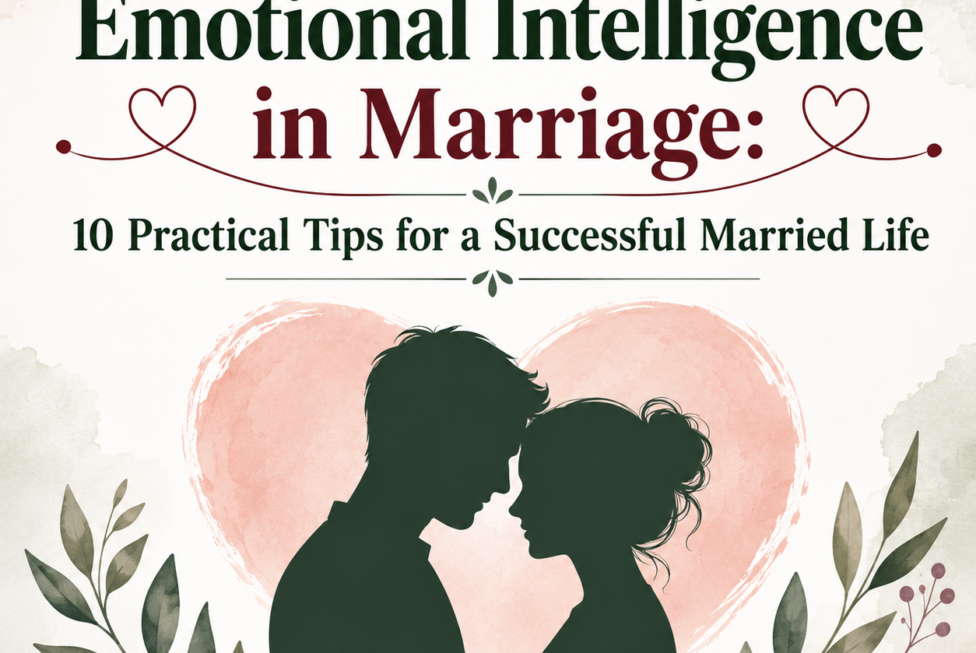
Emotional Intelligence in Marriage: 10 Tips for a Happy Married Life

Emotional intelligence in marriage is the single most underrated skill that separates couples who grow closer over the years from couples who slowly drift apart. In 13 years of working with married couples in my clinic, I have seen the same pattern again and again: it is rarely a lack of love that breaks a marriage — it is a lack of emotional skill. Partners who never learned how to name, regulate, and respond to emotions end up hurting the very person they love the most. The good news is that emotional intelligence, unlike personality, is a learnable skill. In this guide, I will walk you through what this skill actually means for couples, why it matters so much for long-term marital success, and ten practical, therapist-approved tips you can start using in your relationship today. 1. What Is Emotional Intelligence in Marriage? Emotional intelligence, or EQ, is the ability to recognise, understand, and manage your own emotions while also recognising and responding wisely to your partner’s emotions. Psychologist Daniel Goleman described five core components of emotional intelligence: self-awareness, self-regulation, motivation, empathy, and social skills, as explained in this detailed breakdown by Medical News Today. Applied to marriage, emotional intelligence looks like this: noticing you are getting defensive before you snap at your spouse, understanding why your partner’s tone hurt you, and choosing a calm response instead of a reactive one. It is not about suppressing feelings. It is about managing them so they bring you closer instead of pushing you apart. Emotionally intelligent couples do not fight less — every couple disagrees. They simply repair faster, listen better, and never let a disagreement turn into contempt. 2. Why Emotional Intelligence Matters for a Successful Married Life Research consistently backs up what I see in my clinic every week. A comparative study published on PubMed found a strong, direct relationship between emotional intelligence and marital satisfaction — couples with higher EQ reported significantly greater happiness in their marriage. The Gottman Institute, one of the world’s leading relationship research bodies, has also found that emotionally intelligent partners are far more likely to build lasting, satisfying marriages, because they know how to accept influence from their spouse and de-escalate conflict. In simple terms: emotional intelligence in marriage is not a “soft skill.” It is a protective factor that reduces resentment, prevents small issues from becoming big ones, and builds the trust that every successful married life is built on. 3. Five Common Mistakes That Sabotage Emotional Intelligence Even loving partners fall into a few predictable traps that quietly damage emotional connection. Recognising these patterns is often the fastest way to reverse them. Mind-reading instead of asking. Assuming you know why your partner is upset — “You’re only saying that because you’re still angry about last week” — shuts down real conversation before it starts. Ask instead of assuming. Keeping score. Bringing up old arguments during a new one (“You did the same thing in 2019”) floods the conversation with unrelated hurt and makes the current issue impossible to resolve. Withdrawing instead of repairing. Stonewalling — going silent and emotionally shutting your partner out — feels safer in the moment but is one of the strongest predictors of long-term marital dissatisfaction identified by relationship researchers. Confusing venting with communicating. Expressing frustration is healthy; using it to punish your partner is not. The goal of sharing an emotion is always resolution, not retaliation. High Expectation: Expectation from partner is not wrong, but high expectation can make it difficult to your relationships In my clinical experience with couples across Delhi and beyond, these four patterns show up in almost every relationship I work with — and every one of them softens once both partners commit to building real emotional intelligence together. 4. 10 Practical Tips to Improve Emotional Intelligence in Marriage These are the exact strategies I teach couples in psychotherapy session. Start with one or two — this skill builds gradually, not overnight. 1. Practice Active, Nonjudgmental Listening. Most spouses listen to reply, not to understand. Active listening means putting your phone down, facing your partner, and reflecting back what you heard before you respond. Try saying, “What I’m hearing is you felt ignored when I was on my phone — is that right?” This single habit resolves more conflict than any argument ever will. 2. Name Your Emotions Before You React Self-awareness is the foundation of emotional intelligence. Before reacting to your partner, pause and silently label what you are actually feeling — hurt, embarrassed, tired, anxious — rather than just “angry.” Naming the real emotion underneath the anger stops you from lashing out over something smaller than the real issue. 3. Learn Your Partner’s Emotional Triggers Every partner carries emotional sensitivities shaped by their past — childhood experiences, previous relationships, or personal insecurities. Ask your spouse directly: “What makes you feel most hurt or disrespected?” Understanding these triggers helps you avoid unnecessary wounds and respond with more compassion when they do get activated. 4. Practice Empathy Instead of Defensiveness Empathy means trying to feel what your partner feels, even when you disagree with their point of view. Instead of defending yourself the moment you feel criticised, ask yourself: “Why might this matter so much to them?” Empathy de-escalates conflict faster than any argument you could win. 5. Master the Pause Before You Respond When emotions run high, the body enters a stress response and rational thinking shuts down — therapists call this “flooding.” If you notice your heart racing or your voice rising, say, “I need ten minutes before we continue,” and step away. This pause is one of the most powerful self-regulation tools I teach couples, because it prevents words said in anger that can’t be unsaid. 6. Take Responsibility for Your Emotional Reactions Emotionally intelligent partners own their reactions instead of saying, “You made me angry.” A more accurate and productive statement is, “I felt angry when that happened.” This small shift in language removes blame from the conversation
Full Blog

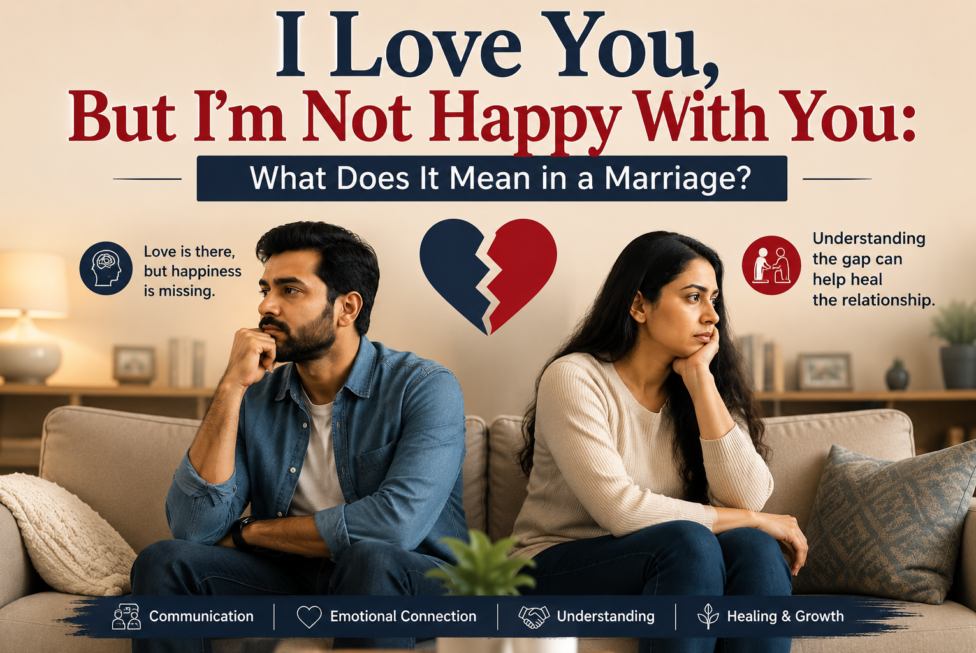
I Love You, But I’m Not Happy With You

I love you, but I’m not happy with you in marriage: A Difficult Truth About Marriage I love you, but I’m not happy with you in marriage.” It sounds contradictory. If  i love my partner how can  be unhappy in the mariage ? Yet many couples experience exactly this situation. they say ” I love you, but i am not happy with in marriage. Dr. Rabya clinical psychologist has seen many couples during her session.  You can love someone deeply and still feel lonely, emotionally disconnected, unheard, frustrated or dissatisfied in the relationship. spouse says “I  love you, but I’m not happy with you in marriage.” this important question“Do we still love each other?” It is: “What is happening in our relationship that is making one or both of us unhappy?” This article “I love you, but I’m not happy with you in marriage”  explores what this statement may mean, why it happens, and when professional marriage counselling or couples therapy may be helpful. Table of Contents Can You Love Someone and Still Be Unhappy? What Does “I Love You, But I’m Not Happy With You” Mean? Why Can Someone Feel Unhappy in a Loving Marriage? 7 Common Reasons for Marital Unhappiness When Love and Happiness Start Feeling Different What Should You Do If Your Partner Says This? What If You Are the One Who Is Unhappy? Can Marriage Counselling Help? When Should You Seek Professional Help? Frequently Asked Questions Final Thoughts 1. I love you, but I’m not haapy with you in marriage. can be possible? Yes!!! I love you it does not mean relationship satisfaction and happiness. You may love your partner because of your emotional bond, shared history, affection, commitment and memories. At the same time, you may feel unhappy because of: Frequent arguments Poor communication Emotional distance Unmet emotional needs Lack of appreciation Loss of trust Resentment Differences in expectations Family or financial pressures Intimacy concerns This means that relationship unhappiness does not automatically mean that love has disappeared. Sometimes, it means that the relationship needs attention. 2.What Does “I Love You, But I’m Not Happy With You” Mean? The same sentence can have very different meanings. For one person, it may mean: “I don’t feel understood anymore.” For another: “We keep having the same arguments.” Someone else may mean: “I feel lonely even though we live together.” Or: “I love you, but something important is missing from our marriage.” The sentence itself is not the complete story. The emotion and experience behind it are what need to be understood. Instead of immediately asking: “Do you still love me?” a more helpful question may be: “What is making you unhappy in our relationship?” That question can shift the conversation from fear to Understanding 3. Why Can Someone Feel Unhappy Even When They Still Love Their Partner? A relationship involves more than love. People also need to feel heard, respected, emotionally connected and able to discuss difficult issues. When these areas become problematic over time, dissatisfaction can grow. A person may still have strong feelings for their partner while simultaneously feeling: “This relationship isn’t working for me the way it used to.” That distinction is important. It means the couple may need to understand the pattern of their relationship, rather than simply question whether love exists. 4. 7 Common Reasons for Marital Unhappiness Every marriage goes through difficult phases. Feeling unhappy in a marriage does not always mean that love has disappeared. Sometimes, it means that important emotional needs, communication patterns, or unresolved concerns are affecting the relationship. Here are seven common reasons why someone may think, “I love my partner, but I’m not happy in my marriage.” 1. Emotional Needs Are Not Being Met Feeling loved is not always the same as feeling understood. One partner may need more affection, appreciation, emotional support, quality time, or reassurance. When these needs remain unspoken or repeatedly go unmet, a person can gradually feel lonely even while living with someone they love. 2. Communication Has Become Difficult Communication problems are among the most common sources of marital conflict. A simple conversation can turn into criticism, defensiveness, anger, or silence. When couples repeatedly experience this pattern, they may begin avoiding important conversations altogether. Over time, unresolved communication problems can create emotional distance and resentment. 3. Resentment Has Built Up Over Time Resentment rarely develops because of one argument. It can accumulate through repeated disappointments, broken promises, unequal responsibilities, criticism, or unresolved conflicts. Eventually, even a small disagreement may trigger emotions connected to many previous experiences. 4. Emotional Intimacy Has Decreased A couple can spend every day together and still feel emotionally disconnected. Emotional intimacy means feeling seen, heard, valued, understood, and emotionally safe with your partner. When meaningful conversations, affection, appreciation, or shared experiences decrease, marriage can begin to feel more like a routine than a relationship. 5. Past Hurt Has Never Been Properly Resolved Some couples stop talking about painful experiences and assume that the problem is over. But unresolved hurt can continue influencing the relationship. Betrayal, repeated criticism, broken trust, family conflicts, or painful experiences from the past may affect how partners respond to each other today. A present argument may sometimes be connected to an older emotional wound. 6. Expectations About Marriage Have Changed People change—and relationships change with them. Career pressures, parenthood, financial responsibilities, ageing parents, lifestyle changes, and personal growth can all affect a marriage. Sometimes, partners discover that their expectations about marriage are no longer the same. The relationship may need new conversations, new boundaries, and new ways of supporting each other. 7. Couples Have Stopped Repairing After Conflict Disagreement does not automatically mean that a marriage is unhealthy. The important question is:      What happens after the disagreement? Healthy relationship functioning involves the ability to return to difficult conversations, acknowledge hurt, listen, apologise when appropriate, and make efforts to repair the relationship. When every conflict ends in prolonged silence, withdrawal, blame, or emotional disconnection, unhappiness can gradually become part of everyday married
Full Blog

Marriage Counselling: What Happens in a Therapy Session? A Step-by-Step Guide

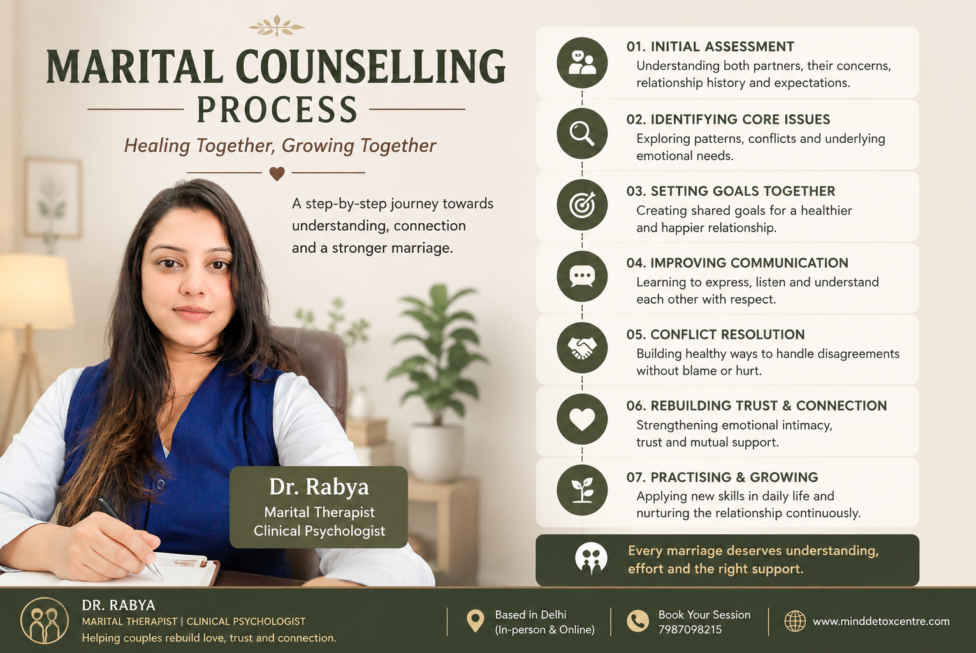
Marriage Counselling: What Happens in a Therapy Session? A Step-by-Step Guide Marriage counselling is not about deciding who is right and who is wrong. It is about understanding what is happening between two people, identifying unhealthy patterns, and creating a safer and more respectful way of communicating. Every marriage goes through difficult phases. Couples may argue about money, parenting, family responsibilities, intimacy, work, or household expectations. Sometimes the problem is not one major event but months or years of small misunderstandings, emotional distance, resentment, or conversations that never seem to reach a solution. As a clinical psychologist and marital therapist, I often meet couples who say, “We have tried talking about it many times, but nothing changes.” That is where professional support can make a difference. At Mind Detox Centre – All Psychological Services, marriage counselling provides couples with a structured and confidential space to understand their relationship, communicate more effectively, work through conflicts, and decide how they want to move forward. Table of Contents What Is Marriage Counselling? Why Do Couples Seek Marriage Counselling? What Happens Before the First Session? Step-by-Step Marriage Counselling Process How Marriage Counselling Improves Communication Rebuilding Trust After Emotional Hurt or Infidelity How Long Does Marriage Counselling Take? Does Marriage Counselling Really Work? Can One Partner Attend Counselling Alone? When Should You Seek Marriage Counselling? Frequently Asked Questions Final Thoughts What Is Marriage Counselling? Marriage counselling, also called marital or couples therapy, is a form of psychological therapy in which partners work with a trained professional to address difficulties affecting their relationship. The American Psychological Association describes couples therapy as therapy involving both partners in a committed relationship, focusing on problems within and between individuals that affect the relationship. In practical terms, marriage counselling helps couples slow down the cycle of repeated arguments and understand what is happening underneath those arguments. For example, a couple may repeatedly fight about household responsibilities. On the surface, the disagreement may appear to be about who should cook, clean, or manage finances. But underneath it may involve feelings of being unappreciated, unsupported, unheard, or taken for granted. Good counselling does not only address the visible argument. It explores the emotional and behavioural patterns behind it. Why Do Couples Seek Marriage Counselling? Couples seek professional help for many different reasons. Some common concerns include: Frequent or unresolved arguments Communication problems Emotional distance Loss of trust Infidelity or dishonesty Financial disagreements Parenting conflicts Interference from extended family Work-life stress Differences in expectations Intimacy concerns Repeated misunderstandings Considering separation or divorce Difficulty reconnecting after a major life event The important point is that you do not have to wait until your marriage reaches a crisis before seeking help. Many couples benefit from addressing problems when they are still manageable. Seeking counselling is not an admission that a marriage has failed. In many cases, it represents a willingness to understand the relationship and work towards positive change. Your source also highlights that early support can be useful before relationship difficulties become deeply entrenched. What Happens Before the First Marriage Counselling Session? It is normal to feel nervous before your first session. One partner may worry: “Will the therapist take my spouse’s side?” Another may think: “Will I be blamed for everything?” A professional therapist’s role is not to conduct a trial between two partners. The first session generally focuses on understanding the relationship and creating a safe, respectful and non-judgmental environment where both partners can express their experiences. The therapist may ask about: How the relationship began Major events in the relationship Current difficulties Family backgrounds Communication patterns Previous attempts to solve the problem Individual concerns Strengths within the relationship Major sources of stress This initial understanding helps the therapist develop a clearer picture of the couple’s difficulties. 7 Strong Step for Marriage Counselling Process Step 1: Understanding the Relationship The first stage is usually assessment and understanding. Rather than focusing only on the latest argument, the therapist tries to understand the larger relationship pattern. Questions may include: How do disagreements usually begin? What happens when one partner becomes angry? Does the other partner withdraw or become defensive? How are conflicts usually resolved? What makes each person feel emotionally supported? What strengths does the relationship already have? The objective is not to identify a winner or loser. The objective is to understand the pattern. Step 2: Identifying the Core Problems Sometimes the issue that couples bring into therapy is only the visible part of a deeper problem. For example, repeated arguments about money may actually involve different expectations about responsibility, security, lifestyle, or decision-making. Similarly, arguments about parenting may involve different childhood experiences, beliefs about discipline, or feelings of being unsupported. During counselling, these underlying factors can be explored so that the couple is not simply putting temporary solutions over a deeper problem. Step 3: Setting Shared Goals Marriage counselling becomes more meaningful when both partners understand what they want to change. Depending on the couple’s needs, goals may include: Communicating respectfully Reducing repeated arguments Rebuilding trust Increasing emotional connection Improving parenting teamwork Managing stress together Understanding each other’s needs Learning healthier ways to handle disagreements. Making a thoughtful decision about the future of the relationship Goals also help the therapist and couple evaluate progress over time. Step 4: Improving Communication Communication is one of the most important areas addressed in marriage counselling. Many couples believe they are communicating when they are actually reacting. One partner speaks. The other becomes defensive. The first partner becomes louder. The second partner withdraws. The conversation eventually becomes an argument. Counselling can help couples interrupt this cycle. Depending on the situation, a therapist may teach skills such as: Active listening Expressing feelings without blame Using respectful language Asking clarifying questions Identifying emotional triggers Listening before responding Discussing one issue at a time The goal is not simply to talk more. The goal is to communicate in a way that allows both partners to feel heard and understood. Step 5: Learning Healthy Conflict Resolution Conflict itself does
Full Blog

Signs of a Failing Marriage: 8 Warning Signs & How to Save It

8 Warning Signs of Failing Marriage & How to Save My Marriage.  Dr. Rabya Umman, Marriage Therapist’s Honest, Clinical Guide Signs of a failing marriage are often easy to miss until real damage is done — recognising them early can be the difference between a relationship that recovers and one that quietly ends. Every marriage goes through rough patches, but there’s a difference between a bad week and a marriage that is quietly, steadily coming apart. In over 13 years of clinical practice — including work as an empanelled counsellor with the Delhi High Court’s mediation and conciliation centre, and clinical training at AIIMS — I have sat across from hundreds of couples who all asked the same question in different words: “Is our marriage actually failing, or are we just going through a phase?” This guide is written by Dr. Rabya honestly not with vague reassurance, but with the patterns I actually see in the counselling room — and what genuinely helps. https://minddetoxcentre.com/marital-counsellor-in-delhi-dr-rabya-umman/ Why “Failing” Doesn’t Always Look Like Fighting Most people expect a failing marriage to look like screaming matches and slammed doors. In reality, the marriages I worry about most in session are the quiet ones — the couples who don’t fight at all anymore because they’ve simply stopped expecting anything from each other. Conflict is not the enemy of a marriage. Indifference is. 8 Strong Signs of a Failing Marriage 1. You’ve Stopped Repairing After Fights Every couple argues. What matters clinically is whether you repair — whether someone reaches out afterward, apologises, or reconnects. When fights simply end in silence with no repair attempt from either side, resentment compounds with every round. 2. Contempt Has Entered Your Conversations Eye-rolling, sarcasm, mocking, or a tone that says “I know better than you” — researchers call this contempt, and it’s one of the strongest predictors of divorce in longitudinal marriage studies. It’s more dangerous than anger because it signals disrespect, not just disagreement. 3. You Parallel-Play Instead of Partner You’re in the same house, sometimes the same bed, but running entirely separate lives — separate schedules, separate phones, separate friend groups, separate decisions about money or children. You’ve become flatmates who share a last name. 4. Physical Intimacy Has Quietly Disappeared — and Neither of You Has Named It Many couples let a sexless or touch-starved marriage go unaddressed for years, assuming it will resolve itself or is simply “normal” once kids or careers enter the picture. Left unspoken, it often becomes a proxy for deeper disconnection. 5. You Feel More Yourself With Other People Than With Your Spouse If you find yourself opening up to a colleague, friend, or even a stranger more freely than to your own partner, that’s worth paying attention to. It doesn’t automatically mean an affair — but it does mean emotional intimacy has migrated elsewhere. 6. Small Issues Trigger Disproportionate Reactions A late reply to a text turns into a two-hour cold war. This usually isn’t about the text — it’s unresolved hurt from months or years ago finding a new outlet. 7. You’ve Started Keeping Score “I did the school run all week, what did you do?” Keeping a mental ledger of who’s contributing more is a sign the relationship has shifted from partnership to transaction. 8. One or Both of You Have Quietly Made an “Exit Plan” This can be literal — a separate savings account, legal consultations — or emotional: mentally rehearsing life without your spouse. In my experience, by the time someone voices this in session, they’ve often been thinking it for months. How Many Signs of a Failing Marriage Actually Mean Trouble? Two or three signs of a failing marriage, especially during a high-stress season (a new baby, job loss, illness in the family), don’t mean your marriage is failing — they mean you’re human. But when four or more of these patterns are present and have persisted for six months or longer, it’s time to intervene deliberately rather than hope it resolves on its own. 5 top Ways To Actually Save a Struggling or broken Marriage Saving a marriage isn’t about grand romantic gestures. Clinically, the marriages that recover do a handful of unglamorous things, consistently. 1. Name the Problem Out Loud — Together Most couples in trouble have never actually said the sentence “I think we’re struggling” to each other, even when both privately know it. Naming it removes the pretending, which is often the biggest source of loneliness in the marriage. 2. Separate the Person From the Pattern Instead of “you’re a bad husband/wife,” identify the pattern: “we shut down after conflict instead of repairing.” This turns the problem into something you solve together, rather than something one partner is blamed for. 3. Rebuild Physical and Emotional Touch Deliberately Don’t wait to “feel like it.” Small, low-pressure physical affection — a hand on the shoulder, a hug at the door — rebuilds the neural pathways of safety and trust before deeper intimacy returns. 4. Get a Neutral Third Party Involved Early, Not as a Last Resort The single biggest mistake I see in my practice is couples waiting until they’re already speaking to lawyers before they speak to a counsellor. Structured, professional marriage counselling works far better as prevention than as a last-ditch rescue attempt. 5. Rebuild Trust Through Small, Repeated Reliability — Not Big Promises Trust isn’t restored by one heartfelt conversation. It’s restored the way it was broken: incrementally, through dozens of small moments where you do what you said you’d do. When Should You See a Marriage Counsellor/Therapist to save marriage? You don’t need to be on the verge of divorce to benefit from counselling. In my clinical experience, couples who seek help early — at the first signs of persistent disconnection — resolve their issues faster and with far less damage than those who wait until resentment has calcified. https://drnehamehta.com Consider professional support if: You’ve had the same fight, unresolved, more than three times One or both of you have
Full Blog

Losing Intimacy in Marital Life? Marital Counsellor in Delhi | Dr. Rabya Umman — Clinical Psychologist

Losing Intimacy in Marital Life? Marital Counsellor in Delhi |  Struggling with emotional distance or loosing intimacy in marital life? You’re not alone — and you’re not broken. Most couples don’t notice intimacy fading until it’s already created a quiet gap in their marital life. It doesn’t happen through one big fight or one dramatic moment. It happens through small, repeated patterns: a conversation cut short because you’re both tired, a hug that becomes routine instead of felt, a “we’ll talk later” that never quite happens. Over time, these small gaps add up. You might still love your partner deeply, yet feel strangely alone in the relationship. You might want to be close, but not know how to bridge the distance without it turning into another argument. Or you may be dealing with a more specific challenge — one partner wanting more physical or emotional closeness than the other, leaving both people feeling either rejected or overwhelmed. This is one of the most common — and most misunderstood — issues couples bring into therapy. Meet Dr. Rabya Umman, a trusted marital counsellor in Delhi with 13 years of clinical experience and Delhi High Court empanelment & Marital Counselor will help to build a healthy and romantic relationship.     Emotional Distance and Losing Intimacy in Relationships: Why It Happens and How to Heal Many couples don’t lose intimacy overnight — it fades slowly, through unspoken frustration, mismatched needs, in-laws interfare and unaddressed issues. At Mind Detox Centre, Dr. Rabya works with couples who feel more comfortable to share their deep desire, marital trauma and helping to express their feeling in front of partner. they feel  like roommates than partners, helping them understand why this happens and how to rebuild closeness with clinical, evidence-based support.  What Is Emotional Distance in a Relationship? Emotional distance is the gradual withdrawal of closeness, vulnerability, sympathy, validation and connection between partners. It often shows up as reduced conversation, less physical affection, and a sense of “living parallel lives” rather than a shared one.  6 Important Common Signs of Losing Intimacy in Marital Life Conversations feel transactional, not personal Physical affection has decreased or disappeared One or both partners feel lonely within the relationship Sexual desire mismatch causes tension or avoidance Emotional needs go unspoken or unmet Increased time spent apart, physically or mentally Why Do Couples Experience Losing Physical or Sexual Needs in Mariatal Life? Mismatched intimacy needs are common and rarely about attraction alone. 5 important root causes often include: https://drnehamehta.com Stress and mental load — anxiety, work pressure, or parenting fatigue reduce desire Unresolved resentment — emotional distance often precedes physical distance Differing love languages — one partner may equate intimacy with touch, the other with words or time Hormonal or health factors — physical and psychological health affect libido Poor communication — needs go unexpressed out of fear, shame, or avoidance  How to Reconnect Emotionally and Physically Talk about needs, not blame. Use “I feel disconnected when…” instead of “You never…” Rebuild small emotional rituals — a daily 10-minute check-in rebuilds trust faster than big gestures. Separate emotional and physical intimacy conversations. Address emotional safety first; physical closeness often follows. Normalize differing needs. Mismatch isn’t dysfunction — it’s a communication and compromise challenge. Seek professional support early. A clinical psychologist can help identify patterns before resentment builds. https://minddetoxcentre.com/signs-of-a-faili…-8-warning-signs  When to Seek Professional Help If distance has lasted months, conversations feel avoidant, or intimacy attempts cause conflict rather than closeness, it’s a sign to seek support — not a sign of failure. At Mind Detox Centre, our clinical psychologists specialize in helping couples rebuild emotional and physical connection through structured, judgment-free therapy.  Frequently Asked Questions Q: What causes emotional distance in a relationship? A: Common causes include unresolved conflict, mismatched needs, stress, and reduced emotional communication over time. Q: Can emotional distance be fixed? A: Yes. With consistent communication, professional guidance, and small daily reconnection habits, most couples can rebuild closeness. Q: Is mismatched sexual desire normal? A: Very common — most couples experience differing desire levels at some point. It becomes a concern only when left unaddressed. Book your confidential session with Dr. Rabya Umman, Clinical Psychologist RCI Reg. Why Choose Dr. Rabya Umman for Marital Counselling   Choosing the right counsellor for your marriage can make all the difference between a relationship that heals and one that stays stuck in the same patterns. Dr. Rabya Umman, a Clinical Psychologist, Psychotherapist and marital counselor, Delhi  with 13 years of experience, brings a rare combination of clinical depth and real-world legal exposure to marital counselling — making her one of Delhi’s most trusted names for couples navigating conflict, distance, or difficult decisions in their relationship. A Marital Counsellor Trusted by the Delhi High Court What sets Dr. Umman apart is her experience as an empanelled marital counsellor with the Delhi High Court, where she works closely with couples during some of the most sensitive and high-stakes moments of their relationship — including court-referred mediation and reconciliation cases. This isn’t textbook experience; it’s real, high-pressure clinical exposure to how relationships break down, what can be repaired, and what genuine reconciliation requires. This background gives her a level of insight that few private practitioners have — she understands both the emotional and legal complexities couples face, and she brings that clarity into every session, whether a couple is trying to rebuild trust or simply learning to communicate again. Deep Clinical Expertise, Beyond the Court Room Alongside her court-referred work, Dr. Umman maintains an active clinical practice supporting couples with: Communication breakdown and recurring conflict Trust issues and infidelity recovery Emotional and physical intimacy concerns Premarital counselling for couples preparing for marriage Parenting and family-related disagreements Reconnecting after emotional distance or resentment Her approach is non-judgmental, structured, and evidence-based — she doesn’t just listen, she helps couples identify patterns, understand each other’s underlying needs, and build practical tools they can use long after therapy ends. Why This Matters for You Marital counselling isn’t about deciding who’s “right.”
Full Blog
mental illness

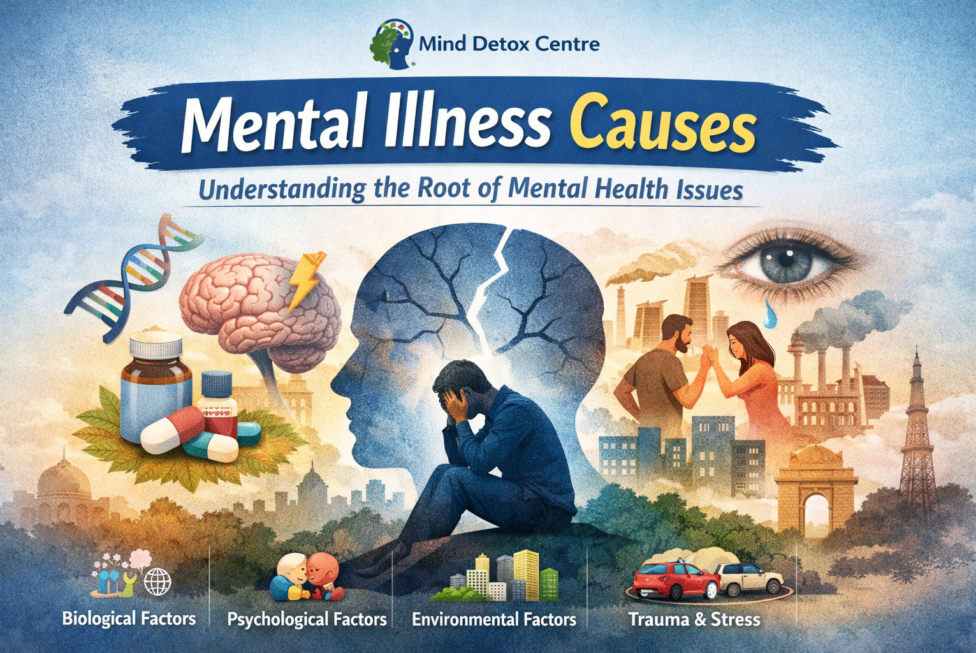
Mental Illness Causes: Understanding the Root of Mental Health Issues

Mental health is just as important as physical health, yet it often goes unnoticed until serious issues arise. Understanding the causes of mental illness is the first step toward prevention and effective treatment. At Mind Detox Centre, Delhi, we specialize in identifying root causes and offering personalized therapies to help individuals regain control over their mental well-being. What is Mental Illness? Mental illness refers to a wide range of conditions that affect mood, thinking, and behavior. These include: Anxiety disorders Depression Bipolar disorder Schizophrenia PTSD (Post-Traumatic Stress Disorder) Understanding the causes helps in early diagnosis and better treatment outcomes. Major Causes of Mental Illness 1. Biological Factors Biological causes are often linked to internal body functions and genetics. Genetic predisposition (family history) Brain chemistry imbalance Hormonal changes Neurological issues 👉 Example: Low serotonin levels can lead to depression. 2. Psychological Factors Your emotional and psychological experiences play a crucial role. Childhood trauma or abuse Neglect or emotional instability Low self-esteem Chronic stress 👉 These factors can deeply impact mental stability over time. 3. Environmental Factors External surroundings and life situations also contribute. Work pressure and job stress Relationship conflicts Financial instability Social isolation 👉 Urban lifestyles like in Delhi often increase stress levels, leading to mental health issues. 4. Traumatic Life Events Sudden or intense life events can trigger mental illness. Loss of a loved one Accidents or disasters Divorce or separation Abuse or violence 5. Substance Abuse Alcohol and drug misuse can significantly affect brain function. Long-term alcohol consumption Drug addiction Prescription drug misuse 👉 These can both cause and worsen mental health disorders. 6. Chronic Medical Conditions Physical health and mental health are interconnected. Chronic illnesses like diabetes or cancer Brain injuries Sleep disorders Early Signs of Mental Illness Recognizing symptoms early can prevent severe complications. Persistent sadness or anxiety Mood swings Withdrawal from social life Difficulty concentrating Changes in sleep or appetite Why Choose Mind Detox Centre in Delhi? If you’re looking for mental health treatment in Delhi, Mind Detox Centre offers: ✔️ Expert psychologists & therapists✔️ Personalized therapy plans✔️ Stress & anxiety management programs✔️ Safe and confidential environment✔️ Holistic healing approach How to Prevent Mental Illness? While not all mental illnesses are preventable, you can reduce risks by: Maintaining a healthy lifestyle Practicing mindfulness & meditation Seeking therapy early Building strong social connections Managing stress effectively Conclusion Understanding the causes of mental illness is crucial for early intervention and recovery. Whether it’s biological, psychological, or environmental, identifying the root cause can lead to effective treatment. If you or your loved ones are struggling, don’t hesitate to seek professional help. Mind Detox Centre in Delhi is here to support your journey toward mental wellness.
Full Blog
Anxiety

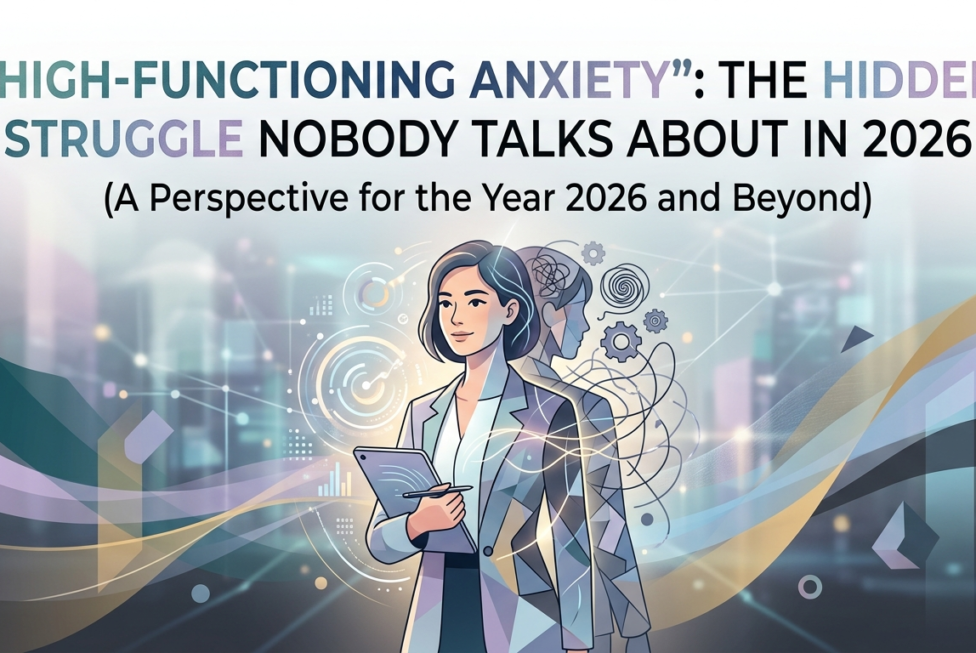
High-Functioning Anxiety”: The Hidden Struggle Nobody Talks About in 2026

You look successful. You meet deadlines. You handle responsibilities.But inside, your mind is constantly racing. Welcome to High-Functioning Anxiety — one of the most overlooked mental health conditions in 2026. At Mind Detox Centre, many individuals seek help not because they “can’t function,” but because they’re exhausted from functioning too much.  What Is High-Functioning Anxiety? High-functioning anxiety is not always visible. People experiencing it often appear: Organized and proactive Ambitious and driven Social and responsible But internally, they struggle with: Constant worry and overthinking Fear of failure Self-doubt despite achievements Difficulty relaxing Unlike typical anxiety, it hides behind productivity.  Why It’s Rising in 2026 This condition is becoming more common due to: 🚀 Hustle Culture The pressure to “always perform” creates internal stress. 📱 Social Media Comparison People constantly compare their lives with others. 💼 Career Pressure Young professionals feel the need to prove themselves quickly. 🎯 Perfectionism The fear of making mistakes leads to mental overload. Mental health experts at Mind Detox Centre report a surge in such cases, especially among working professionals and students.  Signs You Might Have High-Functioning Anxiety You may relate to this if: You overprepare for everything You struggle to say “no” You feel guilty when resting You constantly seek validation You appear calm but feel anxious inside Most people ignore these signs because they are still “doing well” externally. The Hidden Impact Even if life looks stable, high-functioning anxiety can lead to: Emotional burnout Sleep issues Irritability Reduced creativity Long-term mental fatigue Over time, it can develop into serious conditions like panic disorders or depression. How to Manage High-Functioning Anxiety Here are practical strategies recommended by therapists: 1. Redefine Productivity Being busy doesn’t always mean being productive. 2. Set Emotional Boundaries Learn to say “no” without guilt. 3. Practice Mindfulness Daily grounding exercises reduce mental noise. 4. Accept Imperfection Perfection is unrealistic — progress matters more. 5. Seek Professional Support Therapies like CBT help break anxious thought patterns. At Mind Detox Centre, personalized therapy plans help individuals: Manage anxiety triggers Improve emotional resilience Build healthier coping mechanisms  When Should You Get Help? Consider reaching out if: You feel constantly mentally drained Your thoughts don’t “switch off” Anxiety affects your sleep or relationships You feel pressure to always perform Getting help early can prevent deeper mental health issues. Conclusion High-functioning anxiety is dangerous because it often goes unnoticed.Just because you’re managing life doesn’t mean you’re mentally okay. Taking care of your mental health is not a weakness — it’s a necessity. If you relate to these signs, it may be time to pause, reflect, and seek the right support.
Full Blog
mind detox

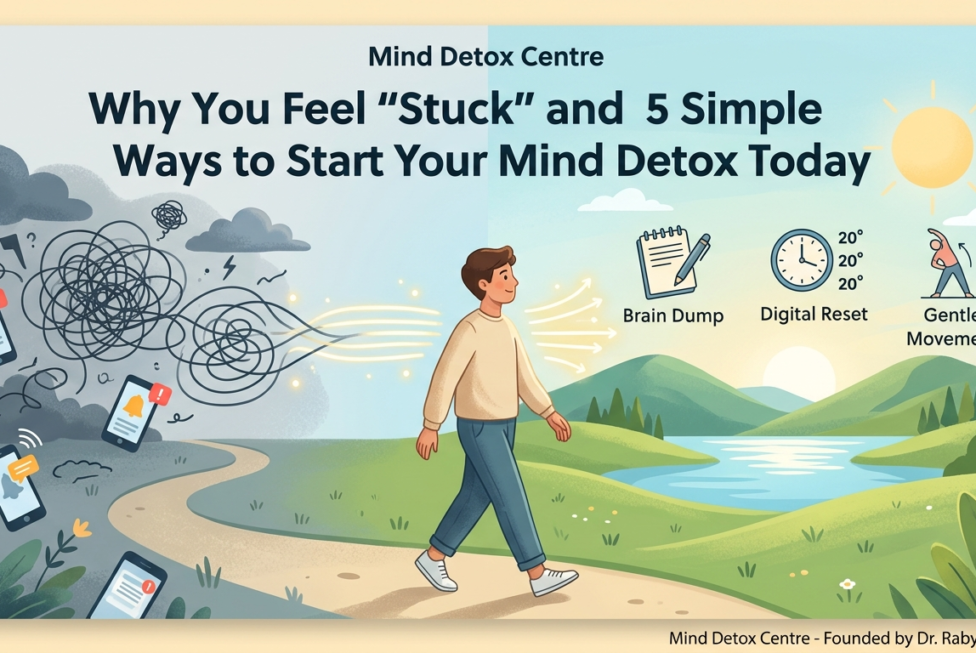
Why You Feel “Stuck” and 5 Simple Ways to Start Your Mind Detox Today

Do you ever wake up feeling tired before your day even begins? Many of us carry an invisible weight—a mental fog caused by constant notifications, work pressure, and unprocessed stress. This “mental clutter” makes it hard to focus, sleep, or feel truly happy. In this guide, you will learn why your brain feels overloaded and discover simple, science-backed strategies used at the Mind Detox Centre to reclaim your mental clarity and peace. What is a Mind Detox? A mind detox isn’t about escaping your life; it’s about cleaning the “internal filters” through which you see the world. Under the leadership of Dr. Rabya Umman, we focus on removing negative thought patterns to make room for resilience. The Signs of Mental Overload Constant irritability over small things. Difficulty making simple decisions (Decision Fatigue). Feeling “wired but tired” at night. 5 Simple Strategies to Reset Your Mind 1. Practice “Brain Dumping” Before bed, write down every single thing on your mind—tasks, worries, or random thoughts. The Result: This moves information from your “active memory” to paper, allowing your brain to finally relax. 2. The 20-20-20 Digital Rule Digital burnout is a leading cause of anxiety in 2026. The Rule: Every 20 minutes, look at something 20 feet away for 20 seconds. Better yet, take a 20-minute “no-phone” walk daily. 3. Gentle Movement (Somatic Release) Stress isn’t just in your head; it’s in your muscles. Simple stretching or rhythmic walking can signal to your nervous system that you are safe. 💡 Quick Tip: Try “Box Breathing.” Inhale for 4 seconds, hold for 4, exhale for 4, and hold for 4. It is the fastest way to calm your heart rate during a busy day. Case Study: A recent client at our centre, a high-level executive, struggled with chronic insomnia. By implementing a strict “Digital Sunset” (no screens after 9 PM) and weekly mentoring sessions, their sleep quality improved by 60% within just three weeks. Statistic: According to recent mental health surveys, over 75% of adults report feeling symptoms of stress, including headache and tired feelings. You are not alone, and it is treatable. Example: Instead of saying “I have so much work,” try saying “I have three priority tasks today.” This small shift in language reduces the “threat” response in your brain. A healthy mind doesn’t happen by accident; it happens by design. By practicing brain dumping, setting digital boundaries, and moving your body, you can stop feeling “stuck” and start feeling present. Action Step Ready to start your journey? Don’t let stress define your life. Book a personal consultation at the Mind Detox Centre today and let Dr. Rabya Umman and our expert team help you rediscover your mental peace. 👉 [Contact Us Today]
Full Blog
mental health

Mental Health in 2026: Why Stress, Anxiety & Burnout Are Rising – And How You Can Take Control

In 2026, mental health is no longer a hidden topic—it’s a growing crisis and a trending search topic across India. From “how to reduce stress” to “online therapy near me,” millions are actively looking for solutions. According to recent reports, over 150 million Indians need mental health support, yet 70–90% don’t receive proper treatment. This gap highlights one thing clearly: People are searching for help—but not finding the right support. That’s where Mind Detox Centre steps in. Why Mental Health Is Trending in 2026 Rising Anxiety & Stress Among Youth Nearly 60% of mental health cases occur before age 35. Stress levels in young adults have doubled in the last decade. Trending keywords: – Anxiety treatment near me – Stress management therapy – Depression help India   Digital Overload & Social Media Pressure Increased screen time is causing comparison anxiety and burnout. Negative online content is directly linked to higher stress levels. Trending searches: – Digital detox therapy – Social media anxiety help – Mind detox programs   Work Burnout & Corporate Stress Workplace burnout is one of the top mental health concerns in 2026. Adults (25–45 age group) are the largest users of mental health services. High-intent keywords: – Corporate stress management – Burnout recovery therapy – Work-life balance counseling Increasing Awareness but Low Treatment 80–85% of people still don’t seek help. Stigma, lack of awareness, and access issues are major barriers.   Signs You Need a Mind Detox – Constant overthinking – Anxiety or panic attacks – Sleep problems (insomnia) – Lack of focus or motivation – Emotional burnout   What Is Mind Detox & Why It Works A Mind Detox is a structured approach to reset your mental health through: – Therapy & counseling – Stress management techniques – Mindfulness & meditation – Emotional healing programs   How Mind Detox Centre Helps You – Personalized Therapy Programs – Stress & Mindfulness Solutions – Expert Counseling Support – Online & Offline Sessions   Why Choose Mind Detox Centre? – Result-driven mental wellness programs – Experienced mental health professionals – Safe, confidential environment – Customized healing plans   Final Thoughts Mental health is no longer optional—it’s essential. Taking a step toward healing is the smartest investment you can make in yourself. Ready to take control of your mental health? Book your first consultation with Mind Detox Centre today.  
Full Blog
Select the fields to be shown. Others will be hidden. Drag and drop to rearrange the order.
  • Image
  • SKU
  • Rating
  • Price
  • Stock
  • Availability
  • Add to cart
  • Description
  • Content
  • Weight
  • Dimensions
  • Additional information
Click outside to hide the comparison bar
Compare